History, roots, and traditions.
They have always held great meaning for me. But I
must admit. Ten years ago (or even just three years ago), I couldn’t have imagined that the national costume would become such a significant part of my life. It’s as if life has made a complete turn, and things have just flowed into their rightful places. Now, when I look at the current state of things, I can only marvel at how life can give surprises .
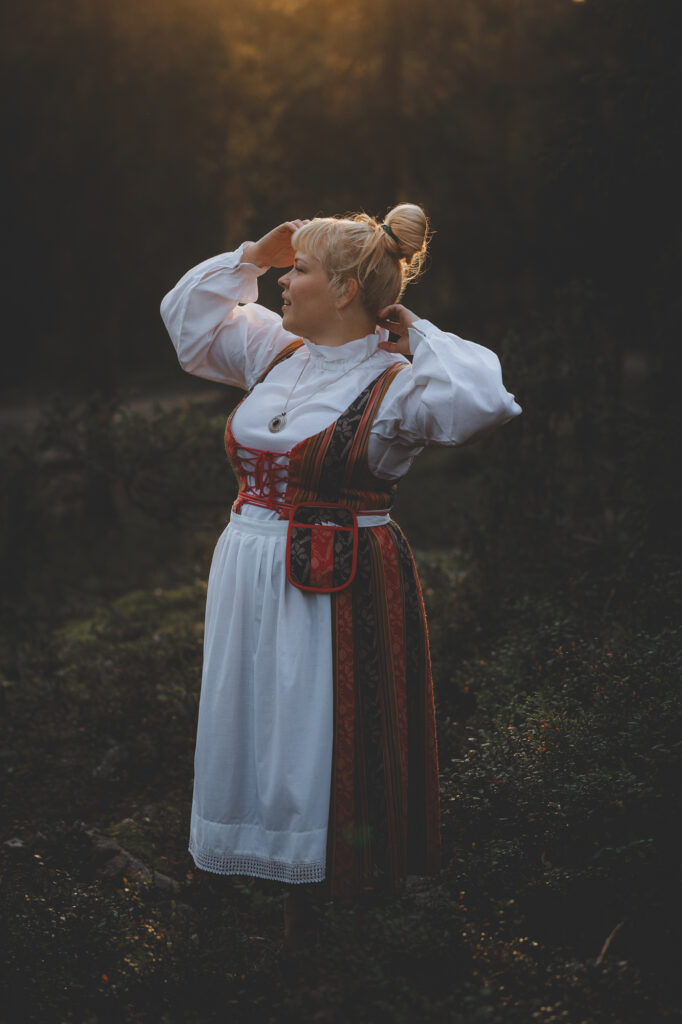
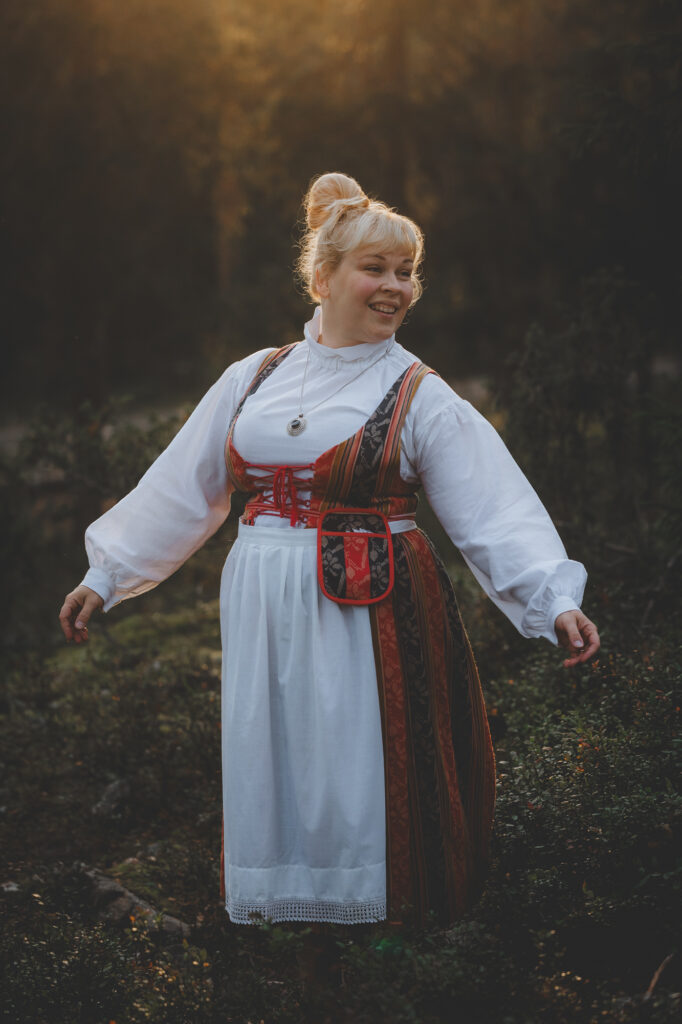
People have been very interested in my performance outfit, so I will now shed some light on the journey of this particular Sääksmäki costume and briefly touch upon the history of the national costume. (I know, “briefly”, me, ha!)
Long live the dress!
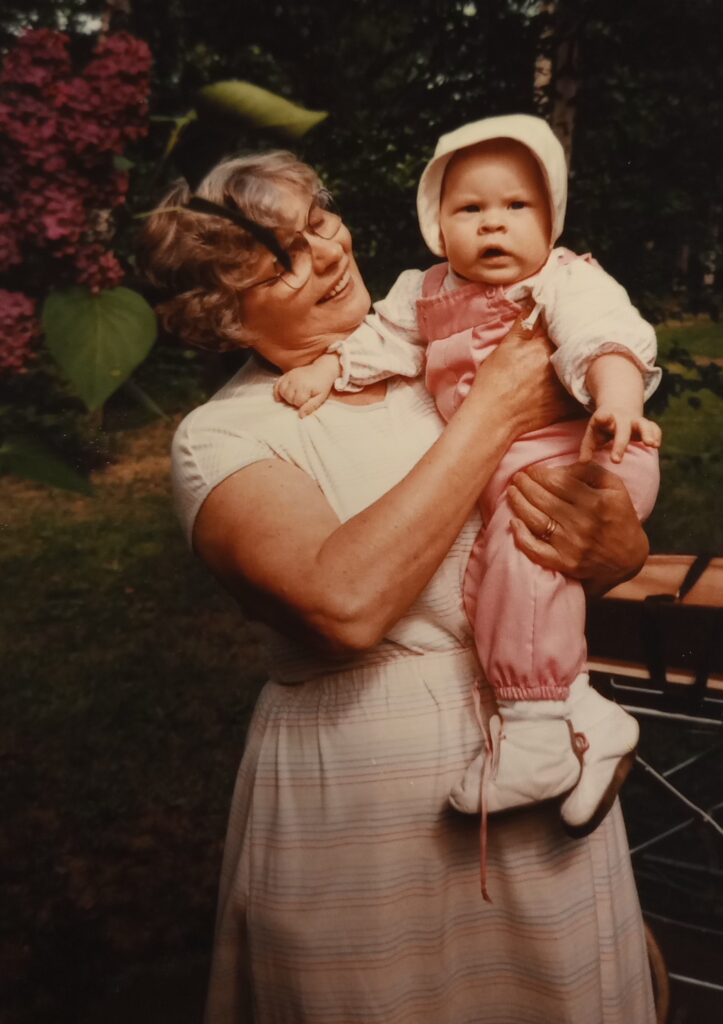
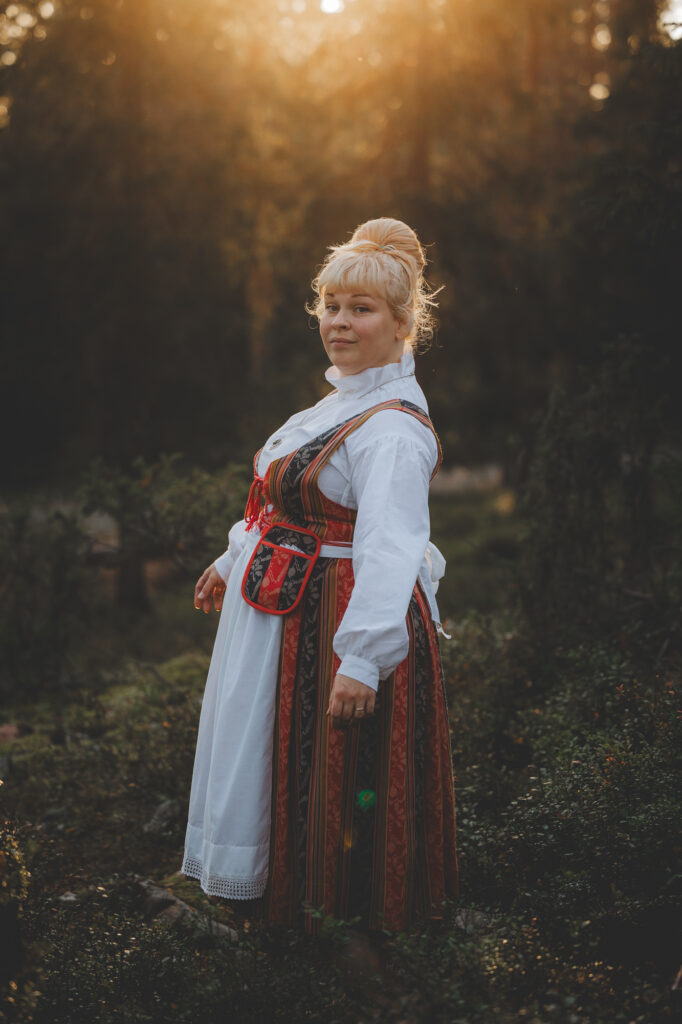
I want to tell you right away how old this costume is, because I’m amazed myself. I received this beautiful Finnish national dress from my father’s mother, Kerttu, while she was still with us. Kerttu, in turn, had received it from her mother-in-law, Olga. My father remembered that Olga had gotten it as a 50th birthday gift, meaning the costume came into our family in the 1950s. So, Iín my family tree, this particular costume has been around for about 75 years!
Let’s go further back in time. The costume had belonged to an elderly neighbor of Olga’s before her. So, in light of this, I can easily assume that the history of this particular costume stretches back a decade or even two further and if this assumption is correct, this dress could possibly be a hundred years old! When this hit me, it left me in complete silence. You wouldn’t believe how much this stirs me!
Sustainability in my heart
You see, I often lie awake at night overthinking about the world and mourning the loss of nature. I try to make sustainable choices within my own life’s limits and want to leave a livable world for my children. In this context, I particularly think about one of today’s most harmful environmental destroyers: ultra-fast fashion. The rags it produces barely survive a single wash, yet this beauty has now been in use through four generations. This resonates so deeply with my green values! Here walks the counterattack to rags! Ha! Take that!
The Orgin
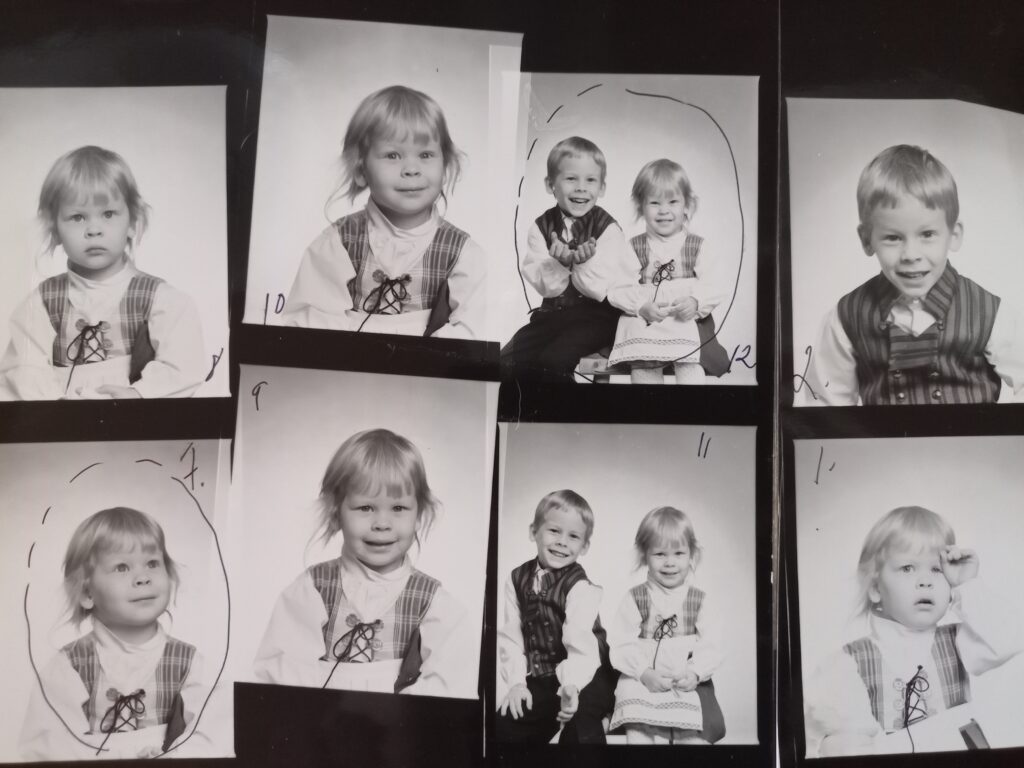
The original outfits come from the 1700s and 1800s when common people wore them. National costumes are replicas of traditional outfits compiled by experts in costume history, representing the attire used by the common people of Finland. National costumes were meant to reinforce national identity.
In total, there are about 400 national costumes in Finland. And no, I don’t have 399 waiting their turn on a hanger. The costumes tell you about the location, and in the past, they told you a lot about the wearer, such as wealth and social class. This Sääksmäki costume is one of the costumes from Häme, southern Finland. When choosing a national costume, one often focuses on one’s own or their family’s homeland and birthplace, as if it’s a visible manifestation of one’s roots. The choice of costume might also be influenced by what one feels closest to in the heart of the region. The Rovaniemi costume could also be mine. Even though we’ve only lived here for eight years, it has felt like coming home to my roots ever since that first summer of the Midnight Sun.
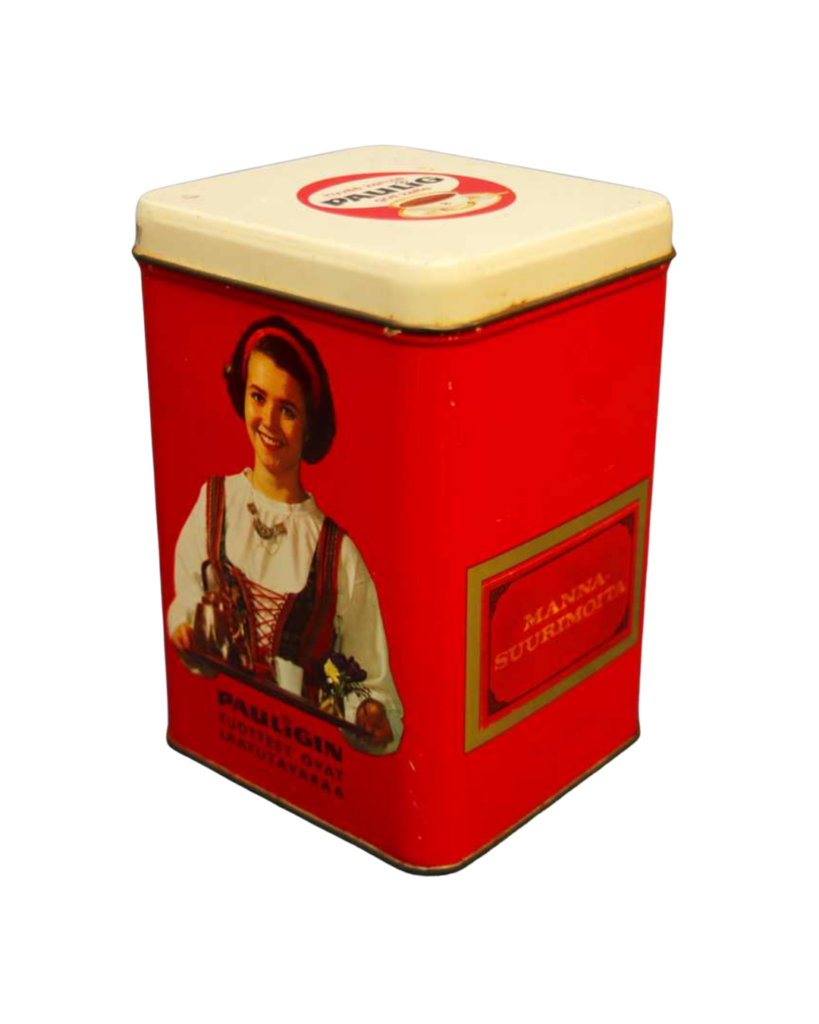
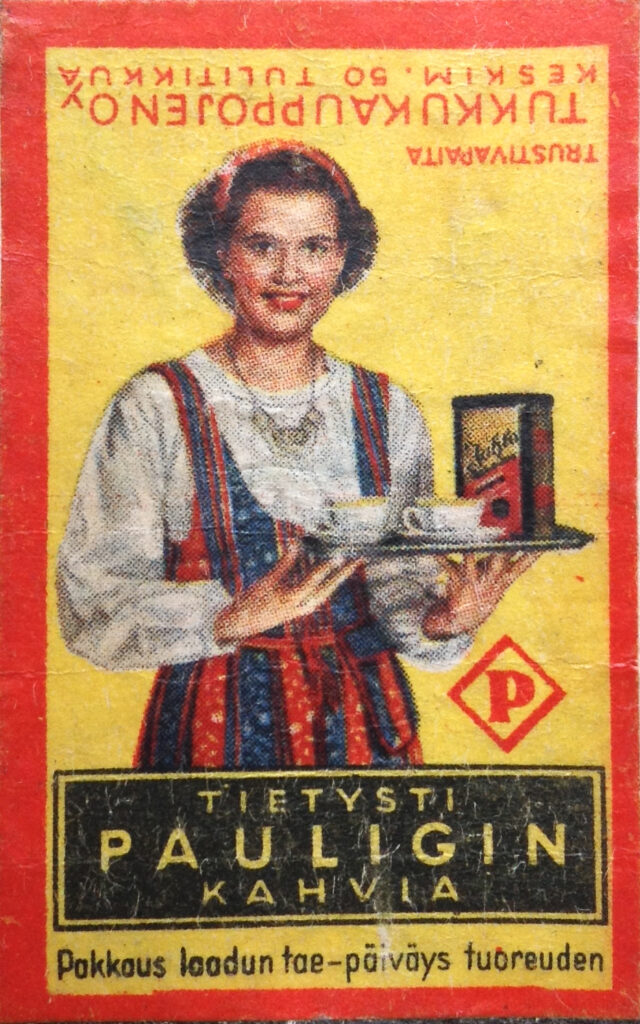
Side note: Finns are hardcore coffee drinkers. According to statistics, Finns drink more coffee than any other country when consumption is adjusted to population size—about 9 kg per person annually (I know, that’s mad!). How does this relate to the national costume? Well, here’s a retro Paulig (a Finnish family-owned food company) coffee tin with “Paula girl” proudly wearing the Sääksmäki costume. Paula was like the celebrity of the time, and she made the Sääksmäki costume famous from 1926 to 2015. Since we Finns didn’t have royalty to follow, we followed her instead 😀
Alright, back on track: Besides being a festive outfit, the national costume is also used by folk dance and folk music groups for performances. The national costume is a set that includes specific parts of the outfit, headwear, shoes, and jewelry. My work and performances are so connected to Finnish culture, so wearing the national costume as part of my performance felt like a natural choice. Every time I tell clients that I’m coming to them weraring my grandmother’s national costume, pride swells within me. How can one sentence contain so much depth and meaning?
The National costume – then and now
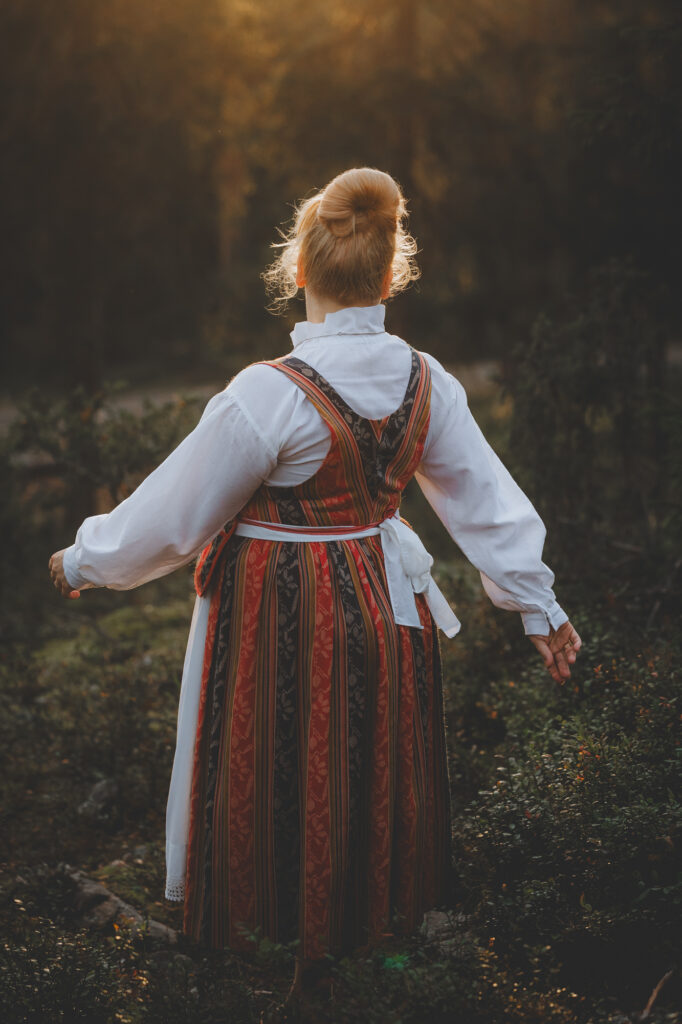
The model for the Sääksmäki national costume was compiled and published by professor of ethnology U. T. Sirelius in 1922. There’s a festive and everyday version of the costume, with blue and red stripes adorned with floral patterns in the festive version.
Today, national costumes are seen less frequently. However, there are signs that a wave is happening and national costumes are making a comeback. The fun event “National Costume Airing Day” has made people dig up their treasures from the backs of their closets and wear them in puplic. I found a nice article about the resurgence of the national costume, I’ll paste it below.
https://www.meillakotona.fi/artikkelit/kansallispuvun-uusi-tuleminen
The new generation doesn’t have memories of how their parents used to dance folk dances, and at the time, it looked outdated and embarrassing to teens. I probably had similar thoughts about it half a lifetime ago. But something has changed over the decades, and now, years later, I see the value, depth and beauty represented by this costume with new eyes. Looking at this costume and seeing the same buttons my grandmother sewed into place, decades later, I feel a ritualistic holiness and connection to my roots when I button them up in preparation for a performance.
The pendant
The Sääksmäki costume officially includes a silver necklace, but in this case, I’ve dared to take some artistic liberties. In the picture, I’m wearing the Uskela pendant, one of the many traditional pieces from Kalevala Koru, a company that is the largest jewelry manufacturer in Finland and one of the biggest in the Nordic countries. This Uskela pendant also belonged to my grandmother, so we’re not too far off the mark here. I love this necklace, and it’s one of the few pieces I wear regularly.
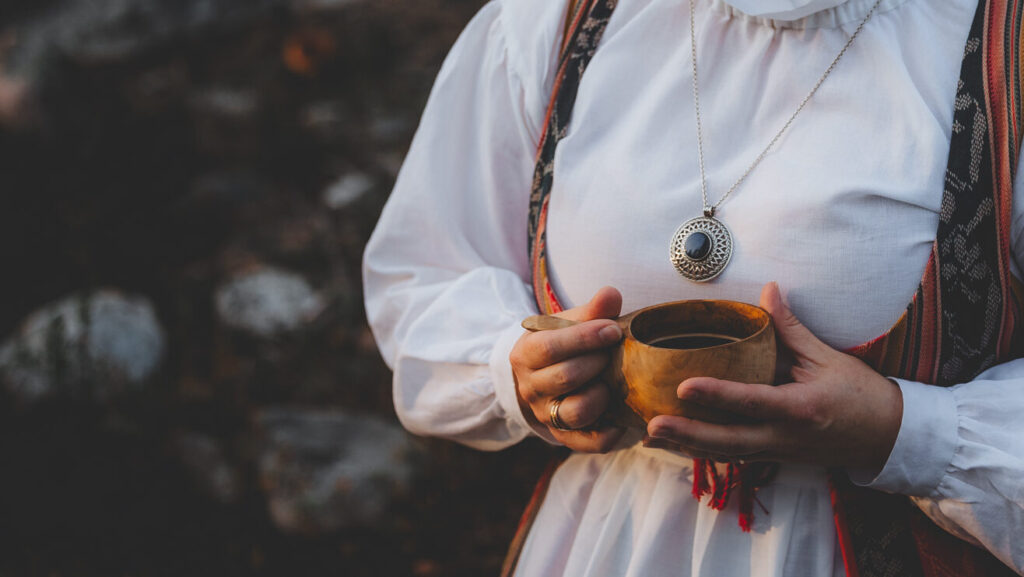
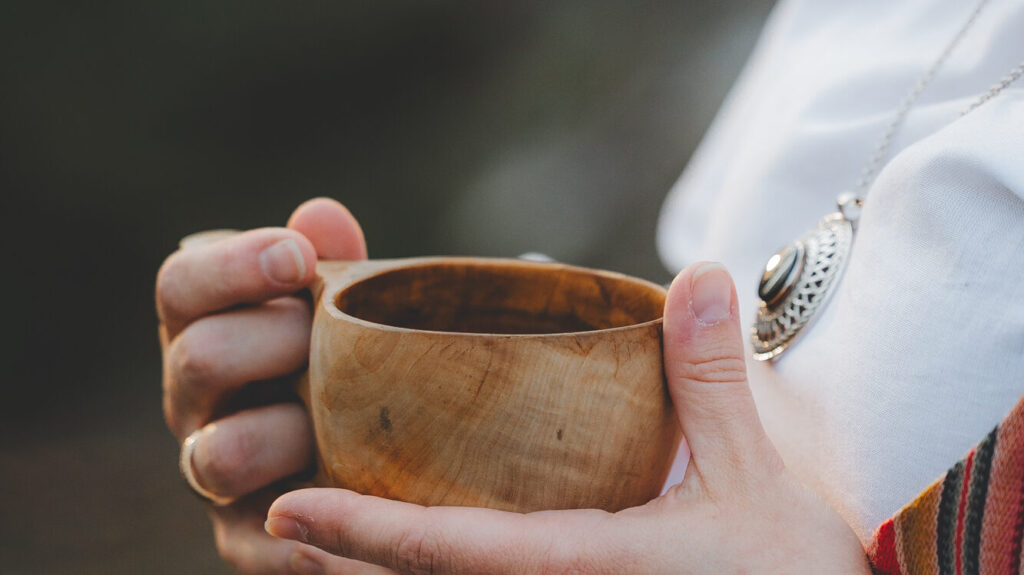
I must confess at this point to you in confidence: my costume is not entirely traditionally assembled. Nowadays, there’s a more accepting attitude toward such creativity, and we are encouraged to combine national costume elements with everyday clothing. However, when the full outfit is worn, mixing is not really allowed. Anyway, I’ll admit to you that the apron does not belong in the festive outfit. Let me explain why through history. Olga’s elderly neighbor gave the dress to her because it no longer fit her. Olga was of a much slenderer build… I’ll just leave that between the lines 😉
I am also on the lookout for the proper shoes and headwear. In the past, girls wore ribbons, and later, whether married or not, it was customary to wear a headpiece, as a full-grown woman was considered “wife material”. The headpiece brings up mixed feelings in me, especially the feminist side of me, which is still considering its stance on this piece of clothing…
The Living legacy of the Finnish national costume
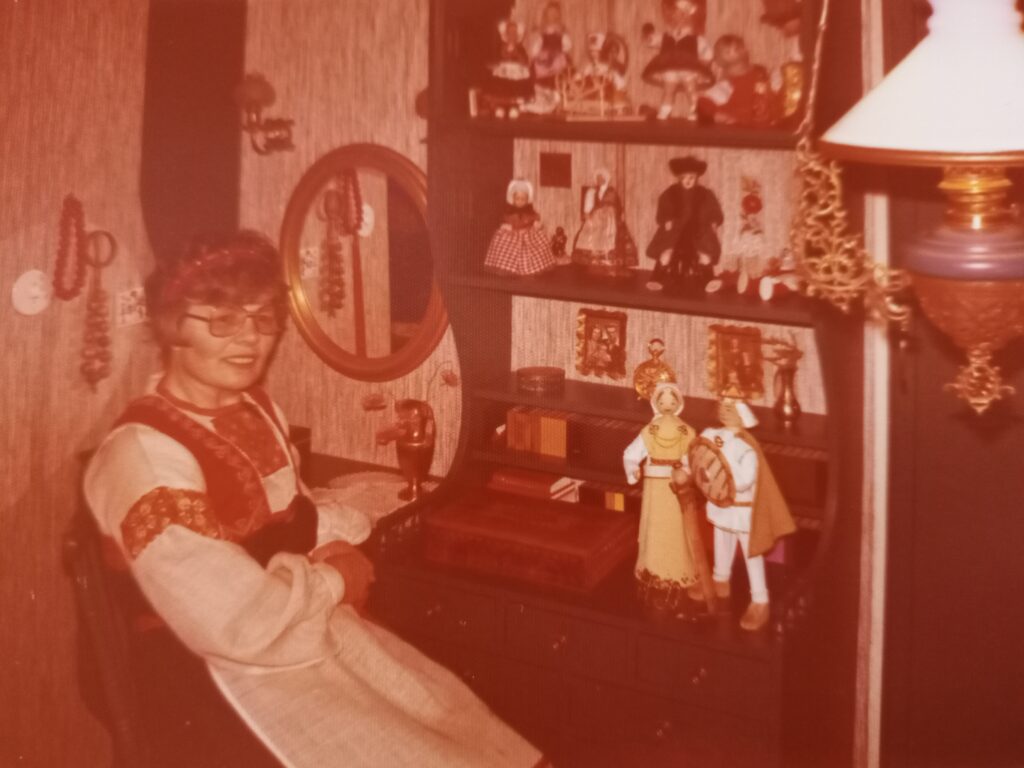
My father’s mother, Kerttu, highly valued traditions during her lifetime. She also loved handcrafts, in which she was a skilled artisan in many ways(Unfortunately, this has not been passed down to me).
Kerttu also had a particular eye for beautiful things. These three things come beautifully together in the national costume.
I wear this Sääksmäki national costume with great pride, nurturing my connection to my roots. When I wear this dress to perform, I don’t just wear fabric and thread—I wear a piece of my heritage and my grandmother’s spirit leads my path. The fact that I get to share a small glimpse of my roots with travelers feels incredibly meaningful. I want to do my part in preserving living heritage and cherishing the unique features of Finnish culture. The most beautiful moments are those when I can build a bridge between the storyteller and the listener – between the present and the past.